
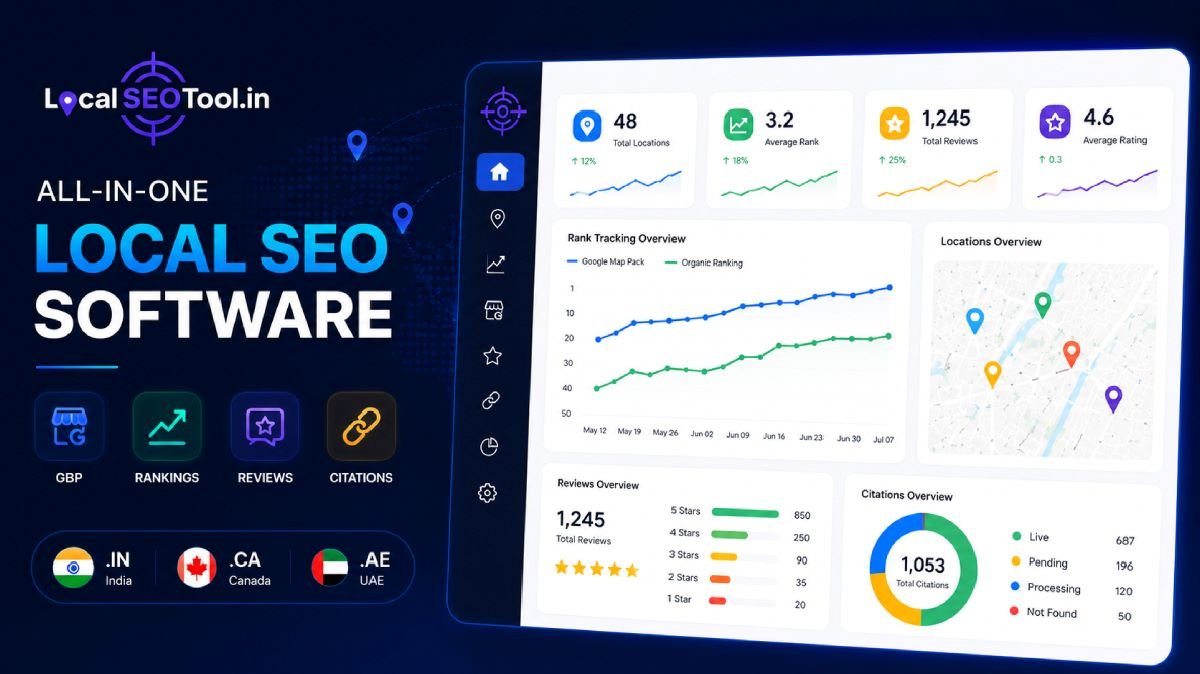
Ten practical local SEO strategies Canadian businesses can use in 2026 to improve Google Search and Maps visibility and attract more nearby customers.
In 2026, customers are increasingly using Google Search and Google Maps to discover businesses, compare services, read reviews, check locations, and decide where to spend their money. For Canadian businesses, appearing prominently in these local search results can make a significant difference in attracting nearby customers. Whether you operate a restaurant in Toronto, a dental clinic in Vancouver, a home-service company in Calgary, a retail store in Edmonton, or a professional service business in Montreal, local SEO can help you become more visible when potential customers are searching for products and services in your area. However, ranking locally involves more than simply adding a city name to your website. Businesses need to optimize their Google Business Profile, create relevant local content, build citations, earn customer reviews, improve their website, and continuously monitor local search performance. This guide explores 10 proven local SEO strategies for Canadian businesses in 2026 and explains how you can use them to improve visibility, attract qualified local traffic, and generate more customers.
What Is Local SEO?
Local SEO is the process of optimizing a business's online presence so it can appear more prominently when people search for products, services, or businesses in a specific geographic area. For example, someone searching for:
- plumber in Toronto
- dentist near me
- best restaurant in Vancouver
- SEO company in Calgary
- HVAC contractor in Edmonton
- coffee shop near me
is demonstrating local search intent. Search engines use various signals to determine which businesses are relevant to these searches. These can include business information, location, website relevance, reviews, citations, links, and other local signals. For Canadian businesses, an effective local SEO strategy can help increase visibility in Google Search and Google Maps, where customers often discover local businesses.
Why Local SEO Matters for Canadian Businesses in 2026
Local search has become an important part of the customer journey. Imagine a customer needs an emergency plumber. Instead of searching through multiple websites, they may search for “plumber near me”, review several businesses, check ratings, look at opening hours, and call one directly from the search results. This creates an opportunity for businesses that have a strong local search presence. Local SEO can help Canadian businesses:
- Increase visibility in local search results
- Generate more Google Maps exposure
- Attract customers searching in their service area
- Increase website traffic
- Generate phone calls and inquiries
- Improve online reputation
- Build trust with potential customers
- Compete with larger businesses
- Reach customers with high purchase intent
The goal isn't simply to rank for more keywords. The goal is to appear in front of the right customers at the right time.
10 Local SEO Strategies for Canadian Businesses
1. Optimize Your Google Business Profile
Your Google Business Profile is one of the most important elements of a local SEO strategy. When customers search for your business or related services, your profile can appear in Google's local results and Maps. A properly optimized profile should provide accurate and useful information about your business. Important areas to optimize include:
- Business name
- Primary category
- Secondary categories
- Business address
- Service areas
- Phone number
- Website URL
- Business hours
- Holiday hours
- Business description
- Services
- Products
- Photos
- Videos
- Customer reviews
Choose the most relevant primary category for your business rather than selecting a category simply because it has a high search volume. Your business information should also remain consistent across your website and other online directories.
Keep your profile active
Don't create a profile and forget about it. Regularly update your profile with:
- New photos
- Business updates
- Offers
- Services
- Products
- Events
- Relevant posts
An accurate and actively managed profile provides customers with more information when they are making a purchasing decision.
2. Target Location-Based Keywords
Keyword research is another important part of local SEO. Canadian businesses should identify the terms potential customers use when searching for their products or services. For example, an insulation company could target:
Service + Location
insulation contractor Toronto insulation company Calgary commercial insulation Vancouver
Service + Near Me
insulation contractor near me insulation installation near me
Location + Service
Toronto insulation services Calgary insulation contractor Vancouver commercial insulation However, avoid creating dozens of low-quality pages simply by changing the city name. Instead, create genuinely useful location-focused content. For example, a Toronto service page could discuss:
- Services available in Toronto
- Local customer requirements
- Areas served
- Relevant local regulations or considerations
- Frequently asked questions
- Service process
- Customer testimonials
- Local contact information
This creates a much more useful experience than simply repeating a city name throughout a page.
3. Create High-Quality Local Content
Content marketing and local SEO can work together. Instead of publishing generic articles that could apply to any country, Canadian businesses can create content that addresses the questions and problems of their local customers. For example: A Toronto HVAC company could publish: “HVAC Maintenance Checklist for Toronto Homes: 10 Things to Check Before Winter” A Vancouver roofing company could publish: “Roof Maintenance in Vancouver: 9 Problems Homeowners Should Watch For” A Calgary landscaping company could publish: “Calgary Landscaping Guide: 10 Ways to Prepare Your Yard for Summer” Local content can help you demonstrate relevance to your target market while giving potential customers useful information.
Content ideas for Canadian businesses
Consider creating:
- Local guides
- Service-area pages
- City-specific FAQs
- Industry guides
- Customer case studies
- Local problem-solving articles
- Seasonal content
- Comparison guides
- Buying guides
- Frequently asked questions
The most effective content answers real customer questions instead of being written only to insert keywords.
4. Build Consistent Local Citations
A local citation is an online mention of your business, typically including information such as your business name, address, and phone number. Citations can appear on:
- Business directories
- Industry directories
- Local directories
- Chamber of Commerce websites
- Review platforms
- Business associations
- Local websites
For Canadian businesses, consistency is particularly important. Your business name, address, phone number, website, and other core information should be accurate wherever your business is listed. For example, avoid having one directory show:
- 123 Main Street
- while another lists:
123 Main St. Minor formatting differences aren't always disastrous, but keeping business information as consistent as practical makes it easier for customers and search engines to understand your business.
Don't focus only on quantity
Building hundreds of low-quality directory listings isn't necessarily a strong strategy. Focus on relevant and trustworthy directories that make sense for your business, industry, and location.
5. Generate More Genuine Customer Reviews
Online reviews influence both customer trust and local search visibility. When someone discovers two similar businesses, reviews can become an important factor in deciding which company to contact. Encourage genuine customers to leave honest feedback after completing a purchase or service. You can make the process easier by providing customers with a direct review link.
Best practices for review generation
Ask genuine customers for feedback Make the process simple Ask at an appropriate point after the service Respond professionally to reviews Thank customers for positive feedback Address negative feedback constructively Never purchase fake reviews Avoid writing reviews for customers or offering misleading incentives for positive reviews. The objective should be to build an authentic reputation over time.
Respond to reviews
Responding to reviews also gives your business an opportunity to demonstrate customer service. For example: Thank you for sharing your experience. We're glad our team could help with your project and appreciate you taking the time to leave feedback. For negative reviews, remain professional and focus on resolving the customer's concern.
6. Optimize Your Website for Local Search
Your website remains an important part of your local SEO strategy. A Google Business Profile can help customers discover your business, but your website provides additional information about your services, expertise, locations, and brand. Make sure your website clearly communicates:
- What your business does
- Where you operate
- Which services you provide
- How customers can contact you
- Why customers should choose you
Important local SEO elements
Optimize relevant pages for:
- Title tags
- Meta descriptions
- Headings
- URLs
- Internal links
- Image alt text
- Service descriptions
- Location information
- Contact information
- For example, instead of a generic title such as:
- Home
- a relevant service page might use:
- Residential Roofing Services in Calgary | Company Name
The exact keyword should naturally reflect what the page is actually about.
7. Create Dedicated Service-Area Pages
If your business serves multiple Canadian cities or regions, service-area pages can help communicate that coverage. For example, a company serving Ontario could potentially have pages for relevant areas such as:
- Toronto
- Mississauga
- Brampton
- Vaughan
- Markham
- Oakville
But each page should contain unique, useful information. Avoid creating hundreds of nearly identical pages where only the city name changes. A strong location page could include:
Introduction
Explain the service and location.
Services
Describe the services available in that area.
Local information
Explain relevant local considerations.
Areas served
Mention nearby neighborhoods or communities when genuinely applicable.
FAQs
Answer questions customers in that area commonly ask.
Reviews or case studies
Show relevant customer experiences where appropriate.
Call to action
Make it easy for visitors to contact the business.
8. Strengthen Your Local Link-Building Strategy
Backlinks remain an important part of SEO. For local businesses, obtaining relevant links from local organizations and websites can strengthen both authority and geographic relevance. Potential opportunities include:
- Local business associations
- Chambers of Commerce
- Industry organizations
- Local news websites
- Community organizations
- Sponsorship pages
- Local events
- Business partnerships
- Relevant industry publications
For example, a Toronto-based construction company might earn a link through a local industry organization, community project, or business association.
Focus on relevance
Don't chase backlinks simply because a website has a high domain authority. A relevant Canadian industry website can potentially be more valuable to your local strategy than an unrelated website with a large backlink profile. Avoid spammy link-building schemes and focus on earning links through useful resources, partnerships, digital PR, and genuine business relationships.
9. Optimize for Mobile and User Experience
A large portion of local searches happen on mobile devices. When someone searches for a nearby business, they may immediately want to:
- Call
- Get directions
- Visit the website
- Check hours
- Read reviews
- Request a quote
- Make an appointment
Your website should make these actions easy.
Check your mobile experience
Make sure:
- Pages load quickly
- Text is easy to read
- Buttons are easy to tap
- Navigation is simple
- Contact information is visible
- Forms work properly
- Images are optimized
- Important content isn't hidden
A technically strong website doesn't automatically guarantee better rankings, but a poor mobile experience can make it harder for visitors to become customers. Local SEO should ultimately support the complete customer journey - search → website → contact → customer.
10. Track Local Rankings and Competitors
One of the biggest mistakes businesses make with local SEO is implementing changes without measuring results. You need to understand: Which keywords are improving? Which keywords are declining? Which locations generate traffic? Which competitors are ranking? How visible is your business in local search? Are website visits increasing? Are calls and inquiries increasing? Tracking these metrics helps you understand whether your SEO strategy is producing meaningful results.
What should Canadian businesses monitor?
Consider tracking:
- SEO Metric
- Why It Matters
- Local keyword rankings
- Measures search visibility
- Google Maps visibility
- Shows local presence
- Organic traffic
- Measures website discovery
- Search impressions
- Shows how often pages appear
- Click-through rate
- Measures search-result engagement
- Reviews
- Indicates customer reputation
- Local citations
- Supports business information consistency
- Website conversions
- Measures business outcomes
- Competitor rankings
- Helps identify opportunities
This is where a dedicated LocalSEOTool can make the process easier.
How LocalSEOTool Can Help Canadian Businesses
Managing local SEO manually can become complicated, especially when a business operates across multiple cities or locations. LocalSEOTool can help businesses and SEO professionals organize and monitor important local SEO activities from one place. Instead of relying on scattered spreadsheets and manually checking search results, businesses can use local SEO technology to make monitoring and optimization more systematic. A local SEO platform can be particularly useful for businesses that want to:
- Monitor local search performance
- Track keyword rankings
- Analyze competitors
- Identify optimization opportunities
- Manage local SEO activities
- Measure progress over time
For agencies, these capabilities can also make it easier to manage local SEO campaigns for multiple clients. The important thing is to use SEO tools as part of a broader strategy rather than treating a tool as a replacement for good content, accurate business information, customer service, and ongoing optimization.
Local SEO for Different Types of Canadian Businesses
Local SEO isn't limited to one industry. Almost any business that serves customers in a specific geographic area can benefit from local search optimization.
Local SEO for Restaurants
Restaurants can focus on:
- Google Business Profile optimization
- Menu information
- Customer reviews
- Photos
- Opening hours
- Local keywords
- Location pages
Local SEO for Home-Service Businesses
Plumbers, electricians, roofers, HVAC companies, cleaners, and contractors can focus on:
- Service-area pages
- Emergency service searches
- Local service keywords
- Customer reviews
- Before-and-after projects
- Local backlinks
Local SEO for Healthcare Businesses
Clinics, dentists, physiotherapists, and other healthcare businesses can focus on:
- Accurate business information
- Service pages
- Location pages
- Reviews
- Helpful educational content
- Clear contact information
Local SEO for Retail Businesses
Retail businesses can optimize:
- Business categories
- Products
- Store information
- Photos
- Opening hours
- Local landing pages
- Customer reviews
The specific strategy should always reflect the business model, customers, and geographic market.
Common Local SEO Mistakes Canadian Businesses Should Avoid
Even businesses that invest in SEO can make mistakes that limit their local visibility.
1. Using the Wrong Google Business Profile Category
Your primary category should accurately represent your core business.
2. Keyword Stuffing
Repeating keywords unnaturally can make content difficult to read and doesn't create a good customer experience.
3. Creating Duplicate Location Pages
Don't create dozens of pages with almost identical content.
4. Ignoring Reviews
Reviews are an important part of how customers evaluate local businesses.
5. Inconsistent Business Information
Keep important business information accurate across your online presence.
6. Buying Fake Reviews
Artificial reviews can damage trust and create long-term problems.
7. Building Low-Quality Backlinks
More backlinks don't automatically mean better SEO.
8. Ignoring Mobile Users
A website that works poorly on smartphones can lose potential customers.
9. Never Tracking Results
Without measurement, it's difficult to determine which SEO activities are working.
10. Expecting Immediate Results
Local SEO is generally an ongoing process. Rankings can change as competitors, search behavior, websites, and search algorithms change.
How Long Does Local SEO Take to Work in Canada?
There isn't a universal timeline for local SEO results. Several factors can influence how quickly a business sees improvements, including:
- Website authority
- Competition
- Industry
- Location
- Existing online presence
- Review profile
- Website quality
- Citation consistency
- Content quality
- Backlink profile
- Current rankings
A new business competing in a highly competitive Canadian market may need more time than an established business with a strong online presence. Instead of expecting overnight results, businesses should monitor progress using meaningful indicators such as rankings, impressions, website traffic, calls, leads, and conversions.
Local SEO Checklist for Canadian Businesses
Use this quick checklist to review your local SEO foundation:
- Claim and verify your Google Business Profile
- Select the correct primary category
- Add relevant secondary categories
- Keep business information accurate
- Add services and products
- Upload high-quality business photos
- Maintain accurate business hours
- Build relevant local citations
- Keep NAP information consistent
- Create location-focused website pages
- Target relevant local keywords
- Publish useful local content
- Encourage genuine customer reviews
- Respond to customer reviews
- Build relevant local backlinks
- Optimize your website for mobile
- Monitor local keyword rankings
- Analyze competitors
- Track traffic and conversions
- Review your local SEO strategy regularly
Final Thoughts
For Canadian businesses, local SEO is more than simply trying to rank higher on Google. It's about making your business easier to discover when customers are actively searching for the products and services you provide. A successful strategy combines Google Business Profile optimization, local keyword research, useful content, consistent citations, genuine reviews, location pages, relevant backlinks, mobile optimization, and performance tracking. The Canadian local search landscape will continue to evolve in 2026, making ongoing optimization increasingly important. Whether you're a small local business, a multi-location company, or an SEO agency managing multiple clients, having the right data and tools can make local SEO easier to manage. With LocalSEOTool, businesses can take a more structured approach to monitoring and improving their local search presence. Start with the fundamentals, measure your results, learn from your competitors, and continuously improve your local SEO strategy. Over time, these efforts can help your business become more visible to the Canadian customers who are already searching for what you offer.